
"regional growth"
5000 article(s) found

Central American coffee region-sweet and well-balanced nut chocolate from Costa Rican coffee beans
Professional Coffee knowledge Exchange more coffee bean information Please follow the coffee workshop (Wechat official account cafe_style) Front Street-Costa Rica Coffee introduction Costa Rica has a mild climate, rainy mountains, fertile soil formed by volcanoes, unique environment that is most suitable for coffee growth. In addition to the favorable growth environment, the Costa Rican government also has

Ethiopian Coffee Manor Regional Flavor description Taste processing Brand
Flavor description of Ethiopian Coffee Farm the geographical environment of Ethiopia is very suitable for coffee growth. Coffee is mainly grown in the southern highlands between 1100 and 2300 meters above sea level. The soil in these areas is well drained, slightly acidic and red loose. Currently, about 25% of the Ethiopian population depends directly or indirectly on coffee production for a living. Use tradition

Colombian Ramon Coffee Bean Flavor description introduction to the taste of the regional treatment method of the manor
Colombian coffee beans many parts of Colombia are between 1200 meters and 1800 meters above sea level, with annual rainfall of about 2000 millimeters. Sufficient sunshine and rainfall are very suitable for coffee growth. In recent years, however, Jos é Ramon Corazos, who lives in the southern province of Uila, has gradually discovered that he is producing less and less coffee on his plantation, and the most important factor is global climate change.
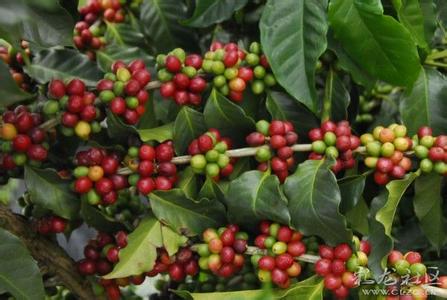
The most important type of coffee in the world-the distribution and growth habits of coffee
Coffee distribution: coffee trees grow in the tropical or subtropical regions of the tropical or subtropical regions with the equator as the center and between the latitudes of 25 degrees south and north. At present, coffee is produced in more than 60 countries, widely distributed in South America, Central America, the West Indies, Asia, Africa, Arabia, the South Pacific and Oceania. In terms of output, Pakistan, which accounts for the largest output in the world,

[Antigua Coffee region] what is the flavor of selected batches of Marguerite coffee beans? Antigua coffee species
Professional coffee knowledge exchange more coffee bean information please follow the coffee workshop (Wechat official account cafe_style) [Antigua coffee producing area] the flavor of selected batches of Marguerite coffee beans? What are the advantages of Antigua coffee growing environment? Antigua (Antigua), a first-rate planting area with volcanic soil, is similar to that of the Tarrazu region of Costa Rica.
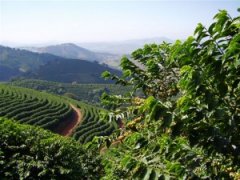
Costa Rican boutique coffee roasts single beans most suitable for summer
As many people know in the boutique coffee world, Costa Rica Tarazhu is located in the fertile volcanic region of Central America, where it has a humid climate and fertile volcanic soil, abundant rainfall throughout the year, high altitude and dense forest natural shade. It provides a unique growth environment for coffee growth. Today, the Brista Coffee West Point training school is going to bring for friends.

Why coffee beans grow higher in the region, the better the quality, the better the growing environment
The higher the quality of coffee beans grows in the region, the better the quality. Roberta coffee trees are native to Congo, Africa, and account for about 20%, 30% of the world's output. Roberta coffee tree is suitable for planting in the lowlands below 500 meters above sea level. It has strong adaptability to the environment, can resist bad climate, resist diseases and insect pests, and is not needed in soil preparation, weeding and pruning.

Berman Manor in the Central Mountain area of Nyeri, a coffee-producing region of Kenya with a good sense of sweetness and richness.
As far as I know, the first coffee grown in Kenya dates back to 1893. Coffee was later grown on a large scale by the British on the plateau at an altitude of 1400 to 2100 meters, where there is volcanic ash soil rich in organic matter. In fact, most coffee is now grown on flatter slopes around the snow-capped Mount Kenya (the main peak is 5199 meters high), all over Kenya.

Jiangsu Rugao bonded Logistics Center the largest entrepot base of imported coffee in the growth triangle area
Professional baristas exchange please follow the coffee workshop (Wechat official account cafe_style) recently, according to Jiangsu Rugao Port Group statistics, Rugao Port bonded Logistics Center completed a total of 2951 TEUs of coffee in and out of the warehouse from January to April this year, with a value of nearly US $200 million, accounting for more than 80% of Jiangsu coffee import and re-export trade, becoming the largest entrepot trade base of imported coffee in the Yangtze River Delta region.

Ceylon, formerly known as Ceylon, is famous for its black tea. Which Asian country now produces Ceylon black tea?
The tea industry in Sri Lanka has gone through a long process of nearly two centuries since the first tea tree was planted in the Royal Botanical Garden of Peradinia. Once commercialized, Ceylon tea soon became famous for its unique taste and high-quality raw materials. Ceylon tea is loved by tea lovers all over the world and satisfies the whole world.

How to grow high-quality coffee bean seeds? What are the planting conditions that affect the growth of coffee beans?
Professional coffee knowledge exchange more coffee bean information please pay attention to the coffee workshop (Wechat official account cafe_style) how to grow high-quality coffee bean seeds? What are the planting conditions that affect the growth of coffee beans? Coffee beans are generally graded according to their size, defect rate and altitude. The size and defect rate of raw beans are easy to understand, and many people do not quite understand why some producing areas

Introduction of Regional Grinding scale for Ramon Coffee Bean processing in Colombia
Colombian Ramon coffee bean processing quality regional grinding scale introduces that the suitable climate in Colombia provides a real natural pasture for coffee. Coffee trees in Colombia are mainly cultivated in the Andes, on steep slopes about 1300 meters above sea level, where the annual temperature is about 18 degrees Celsius, annual rainfall is 2000 to 3000 millimeters, and latitude 1-11.

The coffee bean producing areas of Hawaii, the western and southern parts of Kona region
Whether it is from the shape of beans, dry incense, wet fragrance to the continuous emergence of chocolate, vanilla, tangerine, lavender and so on, the most obvious feeling of this coffee is amazing! And its return is not inferior, and from time to time when my taste buds think it is about to fade, it emerges and proudly declares that it is its territory. The island of Hawaii is the largest of the Hawaiian islands.

Nestle's revenue in the first quarter reached 150 billion, and the coffee business performed well.
On April 22nd, global food giant Nestl é released its first-quarter results for 2021. Nestle's total sales in the first quarter were 21.1 billion Swiss francs (151.559 billion yuan), up 1.3 percent from a year earlier and the biggest quarterly increase in a decade, according to the financial report. this is thanks to increased consumer demand for coffee, dairy products and pet care products during the COVID-19 epidemic.

Panamanian Coffee Manor Caesar Louis Manor Variety planting in Panamanian Coffee Manor A brief introduction to Climate and altitude
Another important factor is that the microclimate in the Poquet Heights of Panama is a unique and important resource for boutique coffee in the Pokuit region; this is the east-to-west environment of Panama that allows cold air to converge above 6500 feet through the Central Mountains, which creates a variety of microclimates in the Pokuit region, making its temperature and rainfall very suitable for plant growth.

Colombia Coffee Flavor Description Producing Region Variety Characteristics Processing Method Taste Introduction
Colombia Coffee Flavor Description Producing Region Variety Characteristics Processing Method Taste Introduction Colombia coffee varieties are mainly Arabica coffee. Plants are small trees or large shrubs, 5-8 meters high, usually multi-branched at the base; old branches are gray, nodes expand, young branches glabrous, compressed. Leaves thinly leathery, ovate-lanceolate or lanceolate, 6-14 cm long, 3. 5 -5 cm wide, apex long acuminate, acuminate

What are the conditions suitable for coffee growth? do you know the main areas where coffee is grown?
For more information on coffee beans, please follow the Coffee Workshop (official Wechat account cafe_style) Front Street-Coffee growing Belt an area suitable for growing coffee in the world is called the coffee belt, which is located on both sides of the equator between latitudes 25 degrees north and 30 degrees south. What factors affect the quality and flavor of coffee? Varieties of coffee trees, in the soil

Colombian Coffee region introduces Hope Manor in the Andes
The pure taste of Colombian coffee comes from Colombia's natural environment with the most favorable conditions for coffee growth. But beyond that, it is inseparable from the hard work of local growers. In Colombia, coffee cultivation has reached 1.07 million hectares, there are about 302000 coffee plantations in the country, and 30 to 40 per cent of the rural population depends directly on coffee production. Columby

Flavor description of soft sour Panamanian jadeite manor coffee beans taste characteristics regional treatment
Panamanian jadeite manor coffee beans taste description characteristics of production area treatment method the Panamanian rose summer growth altitude: 1500-1650 meters, the unique growth environment makes it unique flavor: dry fragrance: tea, flowers (magnolia, tulips) vanilla plants, milk, black sugar sweet, high-grade champagne and aroma up. Wet fragrance: apricot, caramel, milk, flower. To sip: oil.

Introduction to the characteristics of taste and growth environment of Colombian coffee flavor description area
It is well known that in the coffee growing industry, the rainy season determines the harvest season of coffee. Throughout Colombia, the main harvest season of Colombian coffee is from October to February of the following year; the secondary harvest season is from April to September every year. It is generally believed that the quality of the main production season is better than that of the secondary production season. Columby